Agenda-setting intelligence, analysis and advice for the global fashion community.
Agenda-setting intelligence, analysis and advice for the global fashion community.
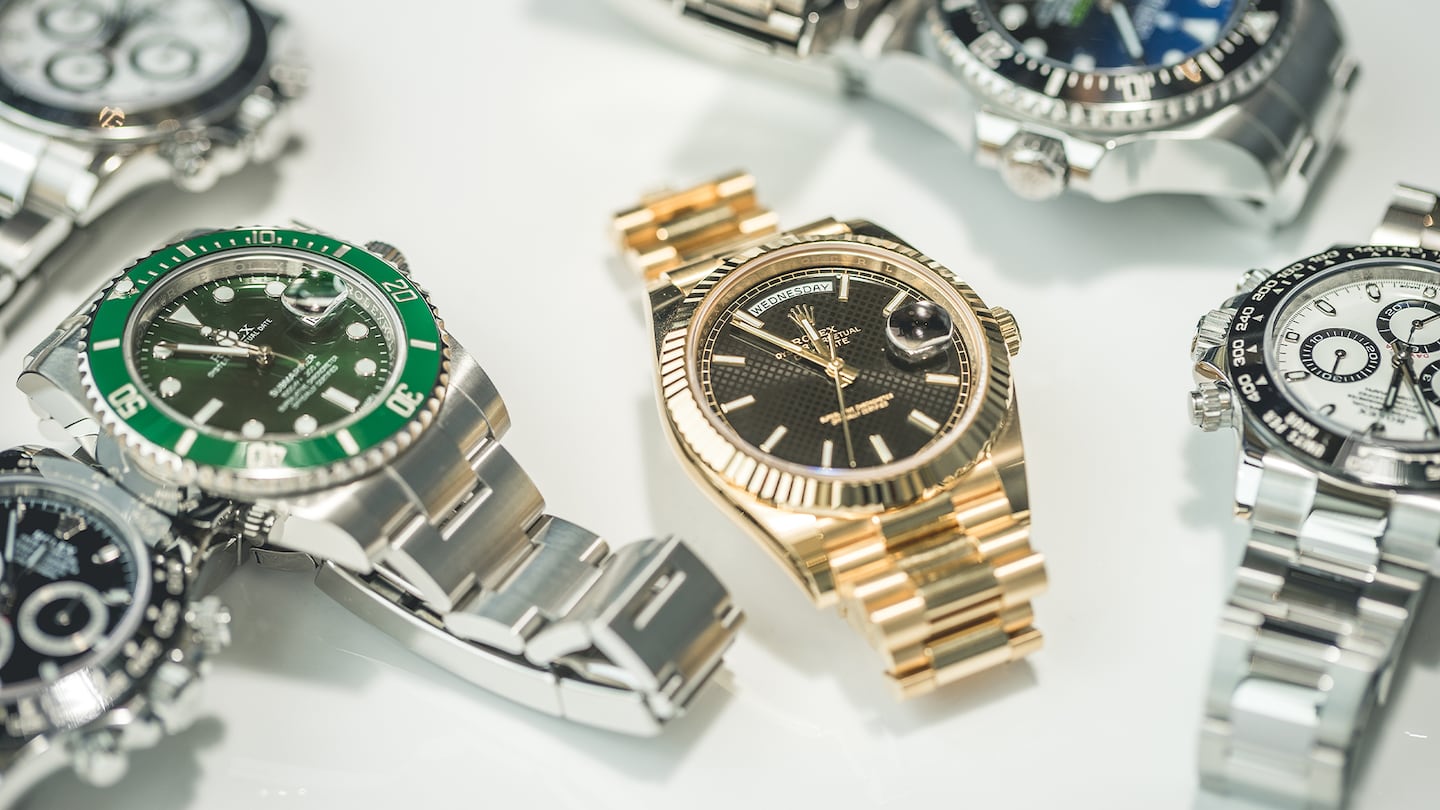
Time is ticking on that bargain Rolex. Try Cartier or Jaeger LeCoultre instead.
US president Donald Trump’s shock 39 percent tariff on Swiss-made imports to the US is pushing up prices for luxury watches. As some consumers seek to beat the levies by choosing used watches instead, second-hand values are inflating again. But there are still deals to be found on the secondary market if buyers are prepared to forego the best-known names and models for something a little less obvious.
Watches have been on a rollercoaster ride over the past five years. Interest exploded during the pandemic; with demand outstripping supply, waiting lists grew and many buyers turned to used timepiece, sending prices for popular models soaring. That all changed in spring 2022, when markets gyrated, cryptocurrencies collapsed and interest rates spiked, bursting the secondhand market.
That downward trajectory has now ended, at least for the leading privately held brands. Secondary watch prices rose 1.5 percent in the three months to Sep. 30, compared with the previous quarter, the first clear pick up in values since the first quarter of 2022, according to the latest report from Morgan Stanley and research platform WatchCharts.
ADVERTISEMENT
The Bloomberg Subdial Index, which tracks prices for the 50 most-traded models, is up about 3.7 percent in the past six months measured in dollars.
To find out what’s driving the secondary gains, we need to look at the market for new watches. The punitive Swiss tariff rate is forcing brands to raise prices in America. Patek Philippe put through a 15 percent US hike in mid-September, while Cartier lifted most models by 10 percent. After two increases this year, Rolex has yet to announce any further escalation. But retailers and collectors are keeping a close eye on its next move.
So far, the blow has been softened by stockpiling. But these extra inventories will be exhausted by the end of the year, Oliver Muller, founder of industry advisory firm LuxeConsult, estimates.
Some wealthy customers scrambled to secure their watch of choice before the hikes came into effect. Others are trading down, say from a gold Rolex to gold and steel, or just steel. It helps that Rolex offers similar options in different metals. Waiting lists are still growing. Rolex is expected to make 1.2 million models this year, with just 72,000 produced by Patek Philippe and 51,000 at Audemars Piguet, according to Vontobel Wealth Management. But for Rolex, waiting lists are concentrated on the highly desirable sport models, such as the Daytona, Submariner and GMT-Master. Other buyers are turning to used timepieces to beat the tariffs. Consequently, Subdial has seen a surge in secondary market activity this year.
With more buyers, and the supply of used timepieces in the US largely limited to those already in the country, prices are stabilising.
Equity markets and cryptocurrencies melting up — at least until recently — and the jump in gold prices may also be playing a part. And just as meme stocks are back, so might a little horology speculation be taking place; the two-and-a-half-year slide in values had piqued the interest of some collectors, particularly for Rolex, Audemars Piguet and Patek Philippe. The big three, which account for about 60 percent of the secondary market, led the previous boom and bust. Patek Philippe and Rolex are at the forefront of this year’s nascent recovery too.
A clutch of names, such as Cie Financiere Richemont SA’s Cartier, Swatch AG’s Omega and LVMH Moet Hennessy Louis Vuitton SE’s TAG Heuer also saw their secondary values increase in the third quarter, according to Morgan Stanley and WatchCharts. (Swatch saw the biggest lift thanks to its MoonSwatch, but these are lower priced models).
But many timepieces available on the secondary market still look attractive. Rolex is the only brand whose watches trade meaningfully above the retail price of new models with an average premium of 15.7 percent. And even here, around half of the models still being made trade above retail. (When watches are discontinued, as ranges are refreshed or limited editions reach their end, their values typically increase).
ADVERTISEMENT
At Patek Philippe and Audemars Piguet, the majority of watches trading above retail are from the most-hyped lines, namely Nautilus and Aquanaut, and the Royal Oak, respectively. No other brand has more than a handful of models commanding secondary market premiums.
At Cartier, watches still in production are on average 31 percent cheaper than new versions. That’s tempting for buyers enticed by the brand, which is gaining in popularity. Average prices for Omega and IWC models on the secondary market are around 40 percent below retail. Little wonder the volume of transactions for these three brands have surged.
Another storied name gaining traction is Richemont’s Jaeger-LeCoultre. Yet prices declined by 5.2 percent in the third quarter, and most used models in the Reverso line, described by GQ magazine as the “It watch of 2025,” trade substantially below retail.
It’s not clear whether the momentum in the secondary market will last, but unless there’s relief on the Swiss tariff rate, prices for new watches are likely to escalate further. Anyone thinking of splashing their bonus on some serious wrist bling would be wise to take note.
By Andrea Felsted
The views expressed in Opinion pieces are those of the author and do not necessarily reflect the views of The Business of Fashion.
How to submit an Opinion piece: The Business of Fashion accepts opinion articles on a wide range of topics. The suggested length is 700-800 words, but submissions of any length within reason will be considered. All submissions must be original and exclusive to BoF. Submissions may be sent to opinion@businessoffashion.com. Please include ‘Opinion’ in the subject line and be sure to substantiate all assertions. Given the volume of submissions we receive, we regret that we are unable to respond in the event that an article is not selected for publication.
US Senator Elizabeth Warren asked the Swiss watchmaker’s CEO in a letter if Rolex was seeking to ‘curry favor’ with Trump in order to secure special-interest duty exemptions for its products.
The watch retailer’s shares surged following strong trading in the first half of the fiscal year and minimal tariff impact.
Fears of potential US tariffs spurred a surge in purchases of used Rolex and Patek Philippe watches in late April, mirroring a jump in Swiss watch exports to the US during the same period.
As the first creative director to succeed founder Azzedine Alaïa, Mulier rejuvenated the Paris-based brand with highly-refined, sculptural styles, bringing runway drama and spawning commercial hits like the Teckel bag and mesh ballerina flats.
High jewellery brands including Boucheron, Chaumet, De Beers and Dior showed new collections at Haute Couture week in Paris as they manage so far to ride out geopolitical tensions which have sent gold and silver to new highs while the dollar sinks.
Matthieu Blazy and Jonathan Anderson each took different approaches to navigating the inherent tensions of French couture, Robert Williams writes. Plus: LVMH’s results.
Fourth-quarter sales in the world’s biggest luxury group rose 1 percent, slightly ahead of expectations. Sales fell 3 percent in the key fashion and leather goods division as the sector continues to face sluggish demand. ‘2026 will not be easy,’ chairman Bernard Arnault said.
The embattled luxury department store is ‘absolutely dependent’ on companies like Chanel, LVMH and Kering, who could ‘suffocate’ the retailer if they stopped shipping, Reuters reported.
The polarising actress has become one of the most frequently tapped brand ambassadors in Hollywood. Whether she has the sway to build a lasting venture with her new lingerie line Syrn is still to be determined.
Fresh off a week of major moments, Tim Blanks and Imran Amed break down the blockbuster couture debuts at Dior and Chanel and what they signify about the state of the luxury industry.
Since the audit began in 2020, the Milanese fashion group found that more than a quarter of suppliers and subcontractors inspected had broken compliance rules.