Agenda-setting intelligence, analysis and advice for the global fashion community.
Agenda-setting intelligence, analysis and advice for the global fashion community.
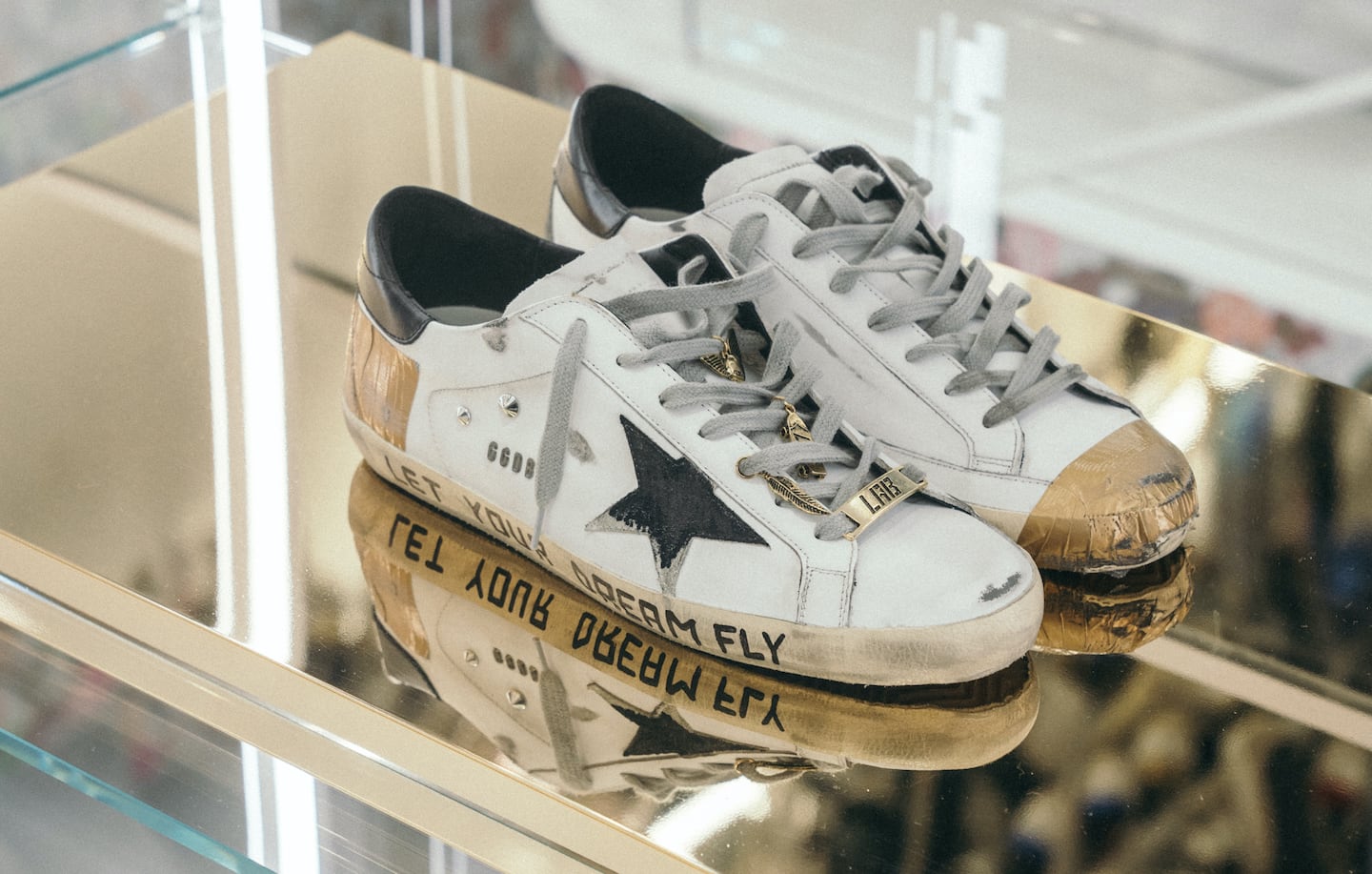
Golden Goose SpA is an Italian maker of distressed-looking sneakers that can set you back $2,000 for a crystal-studded pair. The more than €2.5 billion ($2.9 billion) price its private equity owner just snagged for the business is more opulent than shabby, too.
Permira’s sale to HSG, known formerly as Sequoia Capital China, with Singapore’s Temasek as a minority investor, is one of the few landmark exits from a troubled vintage of buyout deals struck as the world was emerging from the pandemic, just before interest rates spiked. The transaction — twice the size of Prada SpA’s purchase of Versace earlier this year — also comes at a time of depressed demand for luxury goods. The valuation may be less extravagant than what was mooted in an abandoned initial public offering 18 months ago, but the PE firm has roughly doubled the company’s value in five years.
It acquired most of Golden Goose from Carlyle for €1.3 billion in 2020. Investors balked at a €3 billion enterprise value in that doomed Milan IPO effort last year, pointing to the troubles of Dr Martens, another footwear company previously owned by Permira. A slowing market for top-end goods didn’t help after three years of blockbuster growth.
And yet, the worst luxury downturn since the financial crisis (excluding the pandemic) has been good for Golden Goose. As comfortably off but not superrich consumers reined in their spending, megabrands such as Louis Vuitton and Gucci went upmarket to follow the money.
ADVERTISEMENT
As they concentrated on the 1 percent, they abandoned entry level products such as designer sneakers, leaving that market to Golden Goose. They also raised prices on shoes, handbags and other core goods. The average cost of a basket of iconic luxury items in Europe rose by 54 percent between 2019 and the end of 2024, according to analysts at HSBC Holdings Plc.
For comparison, Golden Goose has lifted prices by just 4 percent over the past five years. That makes its sneakers, hardly a snip at an average price of €550 including customisation, look better value for money. The company increased sales from €266 million in 2020 to €655 million in 2024. Growth has continued this year, with sales up 13 percent in the first nine months and earnings before interest, tax, depreciation and amortization up 7 percent. Assuming similar momentum for the full year and a stable Ebitda margin, Golden Goose could generate about €740 million of sales in 2025 and close to €250 million of Ebitda.
The price equates to about 10 times Ebitda, a discount to Moncler SpA’s 13 times and Birkenstock Holding Plc’s 11 times, but still at least a doubling of Permira’s equity value. The firm will stay as a minority investor.
HSG previously backed Labubu maker Pop Mart International Group Ltd., TikTok owner ByteDance Co Ltd. and Chinese social media platform Red Note, so expansion will likely be focused on Asia. Golden Goose makes only 12 percent of its sales in the region, with just 7 percent in China, far less than most luxury brands. About half its sales are in the Americas; the rest in Europe and the Middle East.
There is clearly more to go for in China. With Gucci handbags and Chanel pumps no longer so prized, there is appetite for quirky items that connect emotionally with young shoppers. Take Crocs Inc.’s clogs, which can be customised with charms. They have become a hit with the country’s Gen Z consumers. That bodes well for Golden Goose.
Sneakers account for 90 percent of the company’s sales, so there’s room to diversify. Bags and clothing, which can also be personalised, are other opportunities in the US as well as China. Temasek’s experience as an investor in Stone Island, Ermenegildo Zegna NV and Moncler chairman Remo Ruffini’s holding company should help. Ex-Gucci boss Marco Bizzarri will become chairman.
But hitting Golden Goose’s long-term target of lifting yearly sales to €1 billion won’t be easy. Although there are hopes that China’s luxury market is past the worst, any recovery will take time. And consumers there are more focused on sneakers that help them run faster or tackle more challenging hikes. Nike Inc. said recently that it was seen more as a casual fashion shoe brand, rather than a performance one, holding back sales and forcing it to discount prices.
Meanwhile, big luxury has decided it wants its middle-class customers back. Sneakers and similar goods will be key, bringing more competition.
ADVERTISEMENT
If Golden Goose can successfully expand in China and become a broader lifestyle brand like Ralph Lauren Corp., its future will be far from scruffy. But given the travails of PE owners over the past couple of years, it’s not a bad time to take some money off the table.
By Andrea Felsted
The deal values the company at slightly over $2.9 billion, Bloomberg reported.
The group’s effort to revive the fortunes of the iconic label founded by Gianni Versace will require both patience and pain. ‘The next 12 months will be rough.’
As the first creative director to succeed founder Azzedine Alaïa, Mulier rejuvenated the Paris-based brand with highly-refined, sculptural styles, bringing runway drama and spawning commercial hits like the Teckel bag and mesh ballerina flats.
High jewellery brands including Boucheron, Chaumet, De Beers and Dior showed new collections at Haute Couture week in Paris as they manage so far to ride out geopolitical tensions which have sent gold and silver to new highs while the dollar sinks.
Matthieu Blazy and Jonathan Anderson each took different approaches to navigating the inherent tensions of French couture, Robert Williams writes. Plus: LVMH’s results.
Fourth-quarter sales in the world’s biggest luxury group rose 1 percent, slightly ahead of expectations. Sales fell 3 percent in the key fashion and leather goods division as the sector continues to face sluggish demand. ‘2026 will not be easy,’ chairman Bernard Arnault said.
The embattled luxury department store is ‘absolutely dependent’ on companies like Chanel, LVMH and Kering, who could ‘suffocate’ the retailer if they stopped shipping, Reuters reported.
The polarising actress has become one of the most frequently tapped brand ambassadors in Hollywood. Whether she has the sway to build a lasting venture with her new lingerie line Syrn is still to be determined.
Fresh off a week of major moments, Tim Blanks and Imran Amed break down the blockbuster couture debuts at Dior and Chanel and what they signify about the state of the luxury industry.
Since the audit began in 2020, the Milanese fashion group found that more than a quarter of suppliers and subcontractors inspected had broken compliance rules.