Agenda-setting intelligence, analysis and advice for the global fashion community.
Agenda-setting intelligence, analysis and advice for the global fashion community.
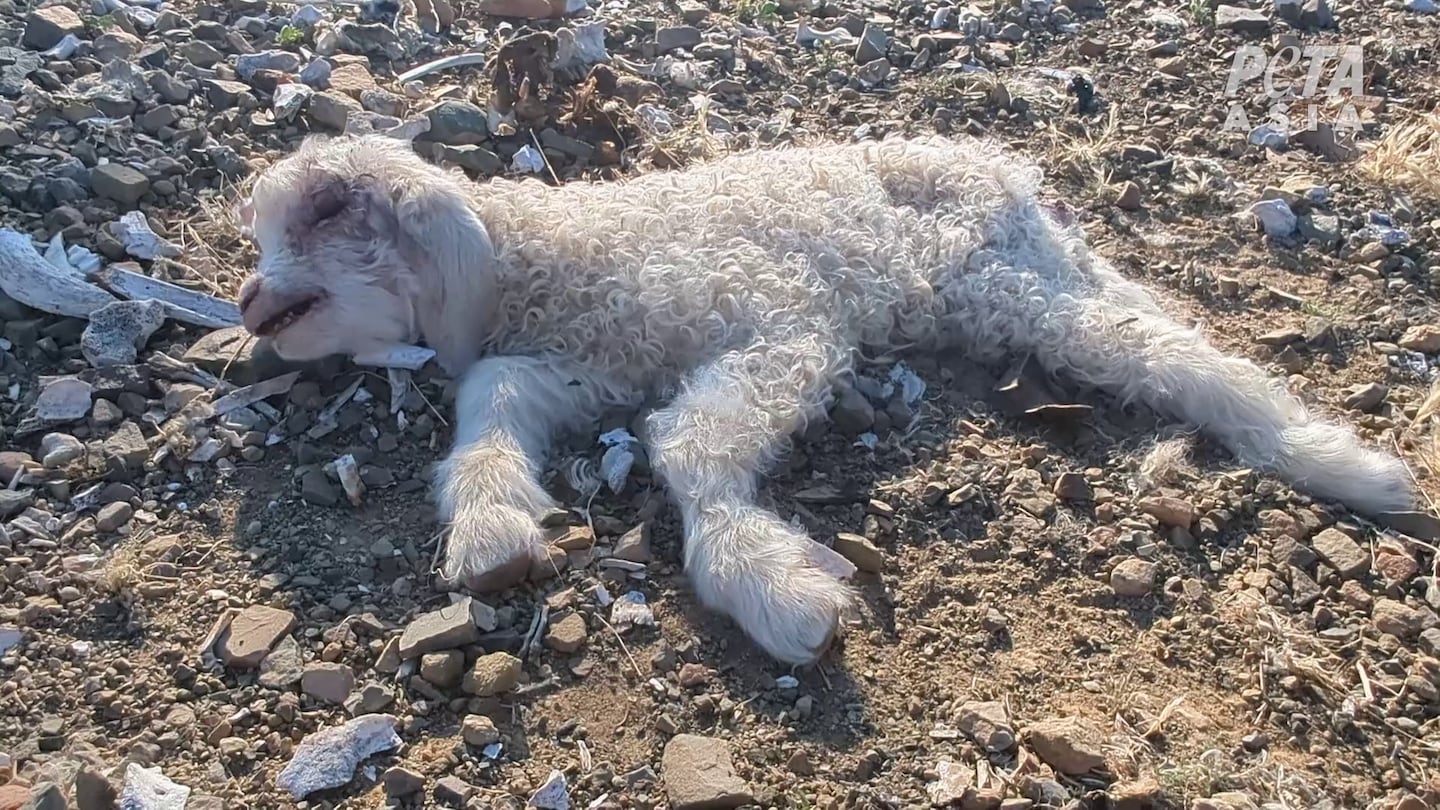
A new investigation by PETA Asia into mohair farms in South Africa and Lesotho, the world’s largest producers of the wool, is renewing scrutiny of fashion’s animal welfare certification schemes.
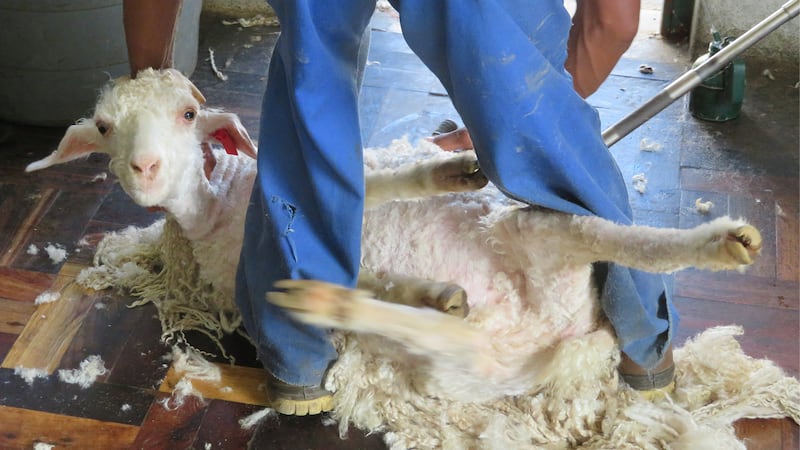
Undercover footage released by PETA in December and filmed at farms it says were certified under the Responsible Mohair Standard shows goats being beaten, dragged and shorn so roughly they were left bleeding.
The investigation, conducted between January 2025 and November 2025, examined conditions at six farms across South Africa and Lesotho, with investigators finding workers violently striking goats with brooms and poles, hauling animals by their horns, legs and tails and forcefully pinning them down. The organisation reported that some goats were injured and bleeding during shearing, while it also shared evidence of the bodies of dead goats discarded at one facility.
The findings have put renewed attention on the gap between certification-backed sourcing claims and on-the-ground practices, particularly as brands and suppliers increasingly rely on third-party standards to reassure customers about animal welfare and traceability.
ADVERTISEMENT
“Just because there’s a label or some sort of certification doesn’t equate to what’s actually happening on the ground,” said Yvonne Taylor, vice president of corporate projects at PETA UK. “Nobody’s going to start kicking a goat in the face or hitting them with a pole when there’s an auditor there.”
The exposé most notably linked one of British brand Paul Smith’s wool suppliers, the Italian textile mill Vitale Barberis Canonico, to the mohair farms where abuse was recorded.
According to PETA, VBC, which also supplies other major brands like Suitsupply, purchased RMS-certified mohair at an October 2025 auction and regularly buys mohair through the same channel. PETA argues that mohair sourced through the auction can be traced back to farms documented in the investigation.
Paul Smith has publicly confirmed it uses VBC’s wool-mohair mix in suits and sells mohair in apparel, PETA noted.
Taylor said PETA approached Paul Smith and urged it to drop mohair in line with its existing animal welfare positioning, noting the brand’s firm stance on animal rights, previously having banned wild animal skins and angora wool, which Paul Smith confirmed still stands.
In a statement to The Business of Fashion, Paul Smith pointed to the wool used by its supplier being RMS certified.
“Our supplier is certified in accordance with the Responsible Mohair Standard,” the company said, describing it as “the leading, most comprehensive, and highest recognised international standard for ensuring ethical, sustainable, and traceable mohair production.”
In a November 2025 letter addressed to Paul Smith Ltd., VBC’s chief executive, Alessandro Barberis Canonico, confirmed that since 2021 the company has been certified under RMS and purchases only RMS-certified mohair fibres.
ADVERTISEMENT
It also noted that it maintains “full traceability records for the entire supply chain, from farm to fabric,” with all the related documentation available to customers.
In a statement in response to PETA’s investigation, industry non-profit Textile Exchange said, “The animal treatment shown in this campaign, if verified and linked to an RMS-certified farm, falls far short of the standards the Responsible Mohair Standard (RMS) requires and expects all certified farms to uphold.”
Textile Exchange added that PETA has not provided the organisation with verified evidence or identifying information that would allow it to confirm whether the farms shown were certified under RMS or to investigate the allegations. It said that without this information it could not substantiate the link being made between the footage and RMS-certified supply chains, noting that there are currently no RMS-certified farms in Lesotho.
PETA’s new mohair report marks its second major investigation into South Africa’s mohair industry. Its first landmark exposé in 2018 is what helped catalyse industry efforts to formalise welfare standards for the yarn’s production, leading Textile Exchange to create and announce the Responsible Mohair Standard in 2021 in the first place.
The standard’s aim was to address animal welfare on mohair-producing goat farms and establish chain-of-custody traceability from certified farms to final products, with individual sites to be audited annually by independent third-party certifiers.
But PETA argues certifications do not reflect daily mistreatment of animals at a farm level.
“The reality is that standards can’t prevent these farmed animals from suffering and dying in horrible ways for yarn production, even if they’re followed to a T,” Taylor said.
PETA has turned more attention to targeting materials such as wool in recent years now that fur use — long its main focus — has declined. Taylor said the mohair sector is now following a path similar to fur, where consumer pressure eventually pushed major fashion houses, institutions and media organisations to shun the material.
ADVERTISEMENT
She believes public opinion will shift on mohair and other animal-derived materials much more quickly than it did on fur.
Want to dive deeper into an insight from this article?Check out The Brain of Fashion, BoF’s new generative AI tool where you can unlock BoF’s sustainability archive with a single question.
Editor's Note: This story was amended on Jan. 22, 2026, to include a statement from Textile Exchange.
After four decades of emotionally-charged campaigns, Peta founder Ingrid Newkirk can all-but declare victory in the war on fur. Taking on more widely-used animal-based materials will be harder, however.
Though some argue angora rabbit fur can be shorn for wool without harming animals, PETA’s 2013 campaign compelled hundreds of major brands to stop using the fibre, radically reducing the trade.

Shayeza Walid is Senior Editorial Associate covering Sustainability at The Business of Fashion. She reports on fashion's environmental impact, climate accountability, supply chain and labour issues. Based in London, she also contributes to BoF's Global Markets and UK coverage.
A new PETA investigation is reigniting animal welfare scrutiny in ‘responsible’ mohair supply chains just as Vinted deepens its US push in New York and evolving research raises new questions about how microplastics behave inside the human body.
The US government must invest in job-training programs and rebuild parts of the domestic supply chain that have eroded over time, Derek Guy writes.
Nike has agreed to substantial payouts to thousands of former garment workers at a Thai supplier after years of pressure from labour rights campaigners and an independent investigation into alleged wage theft during the pandemic.
Between top luxury players being linked to sweatshops and brands walking away from overt sustainability messaging, fashion seemed to backslide on both the social and environmental fronts in 2025.
Thom Browne, Abercrombie & Fitch and Tecovas are among the brands with Super Bowl activations. Meanwhile, the Winter Olympics kick off in Milan.
The embattled luxury department store is ‘absolutely dependent’ on companies like Chanel, LVMH and Kering, who could ‘suffocate’ the retailer if they stopped shipping, Reuters reported.
The polarising actress has become one of the most frequently tapped brand ambassadors in Hollywood. Whether she has the sway to build a lasting venture with her new lingerie line Syrn is still to be determined.
Fresh off a week of major moments, Tim Blanks and Imran Amed break down the blockbuster couture debuts at Dior and Chanel and what they signify about the state of the luxury industry.