
Agenda-setting intelligence, analysis and advice for the global fashion community.
Agenda-setting intelligence, analysis and advice for the global fashion community.
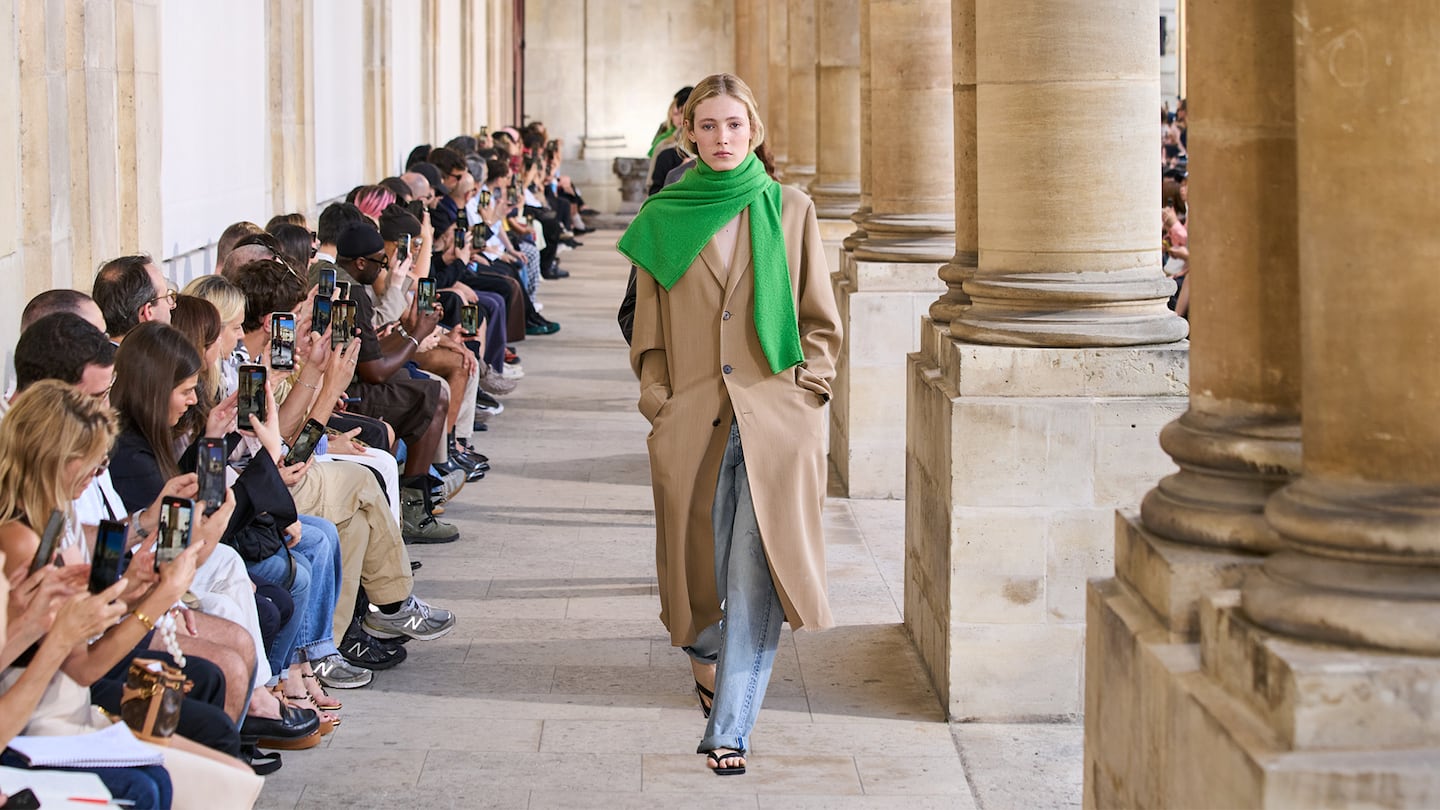
In 2010’s “Retromania”, the music critic Simon Reynolds sketched out how pop music descended into pastiche through endless regurgitation of past styles. Whereas virtually every decade of the 20th Century gave birth to unique musical movements, Reynolds saw an alarming lack of innovation in the 2000s. The same might be said of fashion: by the late 2000s, it was hard to discern what style defined the decade.
The question Reynolds posed at the end of “Retromania” was even more unsettling: what happens when culture has stopped innovating for so long that we have nothing to reference but references themselves? In a fashion world that’s not produced anything radically new since the beginning of this century, the answer seems to be an epidemic of nice clothes.
You can see this in the popularity of The Row and Lemaire, and the rise of labels like Auralee and SSSTein, which makes its debut on the official Paris calendar this week. A similar thing is happening in menswear with the ascent of brands like Our Legacy and Studio Nicholson. In Japan, there’s even a purveyor of nice clothes called Niceness.
Some critics seem to celebrate this. Vanessa Friedman of The New York Times, reviewing the last round of women’s shows, wrote that “the most successful collections of the season were the ones that focused definitively on clothes to wear.” But others have lamented this state of affairs. “Conservatism is stifling our industry as so-called well-mannered good taste ‘forward momentum’ clothes are lauded,” Susanna Lau wrote in a retort. “We need idiosyncrasy, agitation and visionary thinking more than ever.”
ADVERTISEMENT
To be sure, there’s nothing wrong with a nice sweater or a white dress shirt — just don’t call it fashion. Fashion trades in concept and e