Agenda-setting intelligence, analysis and advice for the global fashion community.
Agenda-setting intelligence, analysis and advice for the global fashion community.
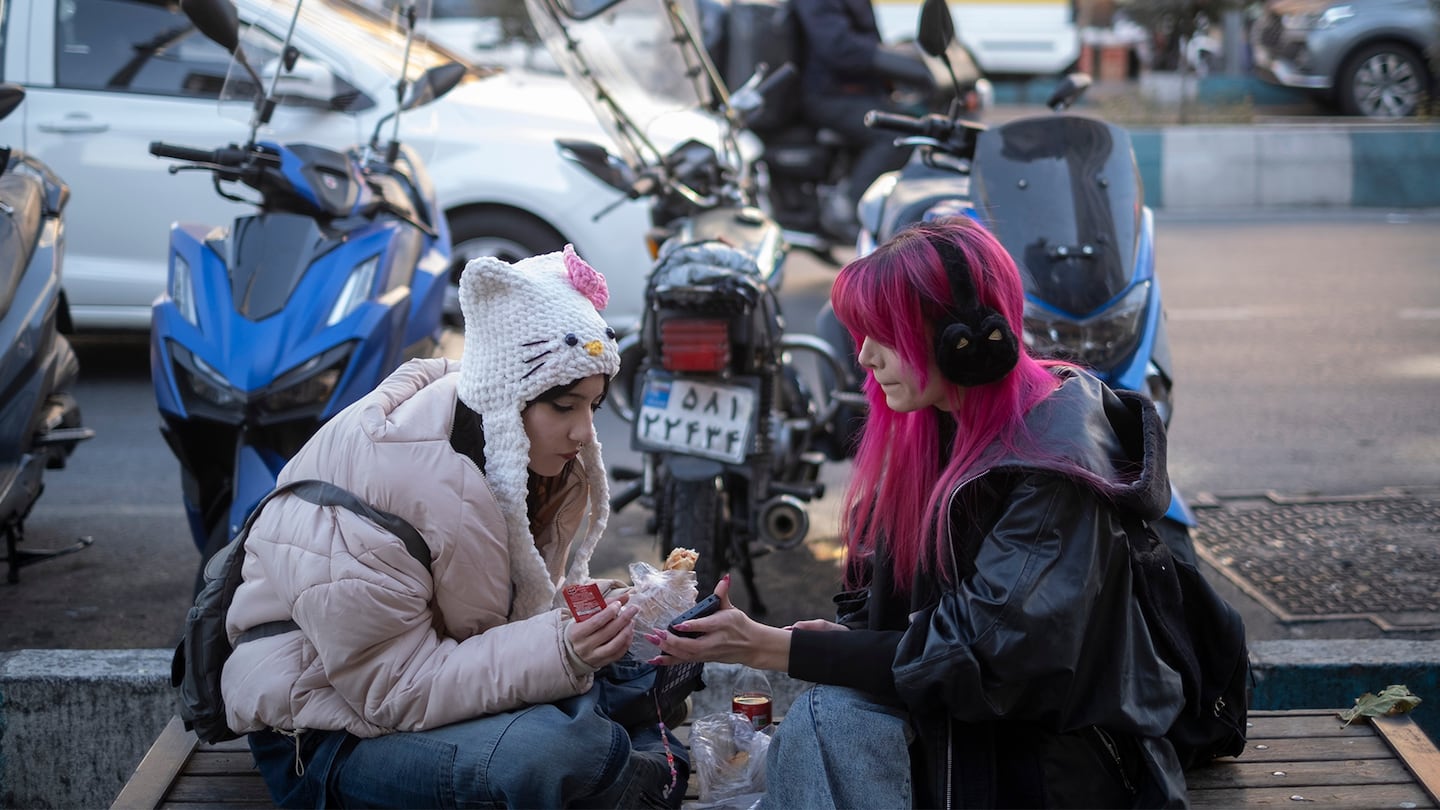
🇮🇷 Iran Mode goes ahead despite nationwide protests and regional tensions. The annual fashion exhibition organised by the Iran Textile Exporters and Manufacturers Association (ITEMA) took place from Jan. 2-5 in Tehran, while deadly protests were ongoing across the country. The national exhibition calendar had been disrupted by regional tensions including the Iran-Israel war in June which prompted US military intervention in Iran. The postponement of Iran Mode reduced attendance numbers from countries such as Russia and Uzbekistan, although trade missions from Armenia, Iraq, Kenya and Tanzania were present, according to ITEMA secretary Saeed Ghadiri. Board member Hamid Talebzadeh said the event shifted its focus toward B2B engagement in response to weakened consumer purchasing power and a shrinking domestic market. Although Iran’s 2017 ban on clothing imports has helped improve the quality of local manufacturing, producers there continue to contend with high inflation, currency instability, smuggling and difficulties in securing raw materials. The latest wave of protests started on Dec. 28 after shopkeepers in Tehran’s Grand Bazaar staged a strike when the Iranian rial fell to a record low against the US dollar, further battering an already fragile economy. Retailers also shuttered their businesses amid ongoing protests and an internet blackout. Concerns are now mounting over a possible escalation as US president Donald Trump threatened to once again intervene militarily in Iran and slap a 25 percent tariff on any country doing business with the country. [Parastoo Nabati for BoF]
🇮🇳 Indian textile exporters predict a 50% decline amid US trade tensions. The Confederation of Indian Textile Industry recently warned a parliamentary committee of dire consequences if further relief measures aren’t taken by the government following the 50 percent additional US tariffs on Indian goods which drove American buyers to source from suppliers elsewhere. “65 percent of respondents [to our survey] opined that relief measures announced so far by the government have not been enough. Further, in the absence of any clarity on the resolution of the issue, industry is expecting a further decline in their order books up to 50 percent in Jan-March quarter of 2026,” CITI said. “Buyers who were earlier considering shifting some orders to India no longer want to come. They have started writing to us, asking what happens if this 500 percent tariff is imposed, who will take the guarantee,” said Vijay Agarwal, chairman of the Cotton Textiles Export Promotion Council, referring to the touted US bill proposing 500 percent tariffs on countries such as India that continue trading with Russia. [Economic Times]
🇨🇳 Luxury brands eye China’s new customs rules in Hainan. The tropical island, China’s southernmost province, has been under a new customs regime since Beijing cordoned it off from the mainland on Dec. 18 as a duty-free customs zone under the Hainan Free Trade Port scheme. The delineation effectively expanded the duty-free market on the island. “Hainan’s zero-tariff policy for imported goods will become much broader [with] the proportion of imported commodities eligible for zero tariffs [jumping] to about 74 percent from 21 percent, involving around 6,000 tax items,” according to local media Yicai. Hainan also expanded its a 30-day visa-free policy for tourists from 59 countries to 86 last year resulting in an influx of visitors from Russia, South Korea, Malaysia, Singapore, Vietnam and elsewhere. [Jing Daily, Yicai, Reuters]
🌎 Mercosur-EU deal set to boost European luxury in South America. A free-trade agreement between the European Union and the Mercosur trading bloc of South American countries has finally concluded a key milestone despite years of opposition from key EU states. Though it still requires the approval of the European parliament within the next few months, it is widely expected to be ratified. A reduction of tariffs on EU goods is expected to boost luxury and fashion sales in the Mercosur bloc which includes full members Argentina, Brazil, Paraguay and Uruguay (Venezuela is suspended and accession state Bolivia is not understood to be part of the agreement). [Atlantic Council, BBC, Sourcing Journal]
ADVERTISEMENT
🇲🇽 Mexico’s Shein and Temu resellers absorb 19% import tax. Instead of passing the levy on to their clients, local resellers have largely taken a hit to their profits since it was introduced in December. “One unintended casualty of the new tax is the livelihoods of catalog salespeople and shopping intermediaries who resell items from these platforms — some 3.1 million people, many of whom are working-class, middle-aged women,” according to a report by Rest of World. After ordering from the China-founded ultra-fast fashion platforms, resellers charge customers slightly higher prices to make a profit. Working in the informal economy, many don’t pay taxes. [Rest of World]
🇨🇳 LVMH-backed L Catterton partners with China beauty group Mao Geping. The US private equity firm backed by LVMH and Groupe Arnault has signed a strategic partnership with Hangzhou-based Mao Geping, the Chinese beauty brand founded in 2000. The deal is expected to boost the brand’s presence in international markets, with the two parties also reportedly planning to establish an equity investment fund focused on the global luxury beauty sector. The company said that the founder and controlling shareholder, makeup artist Mao Geping, and six shareholders and executive directors plan to sell up to 17.2 million shares (no more than 3.51 percent) in the first half of this year. [Yicai Global]
🇮🇩 Indonesia introduces new tariff policy to protect domestic textile sector. The government last month adopted a new regime to safeguard cotton woven fabric producers in the face of increased imports, according to a report from Jakarta Globe ID. The Bea Masuk Tindakan Pengmanan (BMTP) duty will be applied on top of existing import duties but imports from 122 developing country members of the World Trade Organization, such as Thailand, Malaysia, the Philippines, and African and Latin American countries, will be exempt from the duty when it comes into effect. [Sourcing Journal]
🇨🇳 Six Chinese brands selected as finalists for New Wave Fashion Awards. Eponymous labels Feng Chen Wang, Chen Sifan and Angus Chiang and brands Moto Guo (by Moto Guo and Kinder Huang), 8ON8 (by Li Gong), Mayali (by Maya Li) will compete for the inaugural prize at Shanghai Fashion Week in March. The prize was spearheaded by Shanghai Fashion Designers Association, led by executive vice chairman Lv Xiaolei (also known as Madame Lu) who also serves as secretary general of the Shanghai Fashion Week Organising Committee. [FashionNetwork]
🇯🇵 Japan’s Fast Retailing hikes annual forecast after quarterly profits surge. The Uniqlo owner Thursday said operating profit during the quarter jumped 34 percent from a year earlier as it benefited from strong sales at home and expansions in Europe and North America. The firm also lifted its annual earnings estimate, predicting a fifth consecutive year of record profit. The results show the company has managed to maintain profit growth despite US tariffs that have disrupted global trade and indicate a recovery in its mainland China business, its largest overseas market. [BoF]
🇹🇷 Turkish denim manufacturers face 27% minimum wage increase. Istanbul-based Calik Denim and Denimtek Tekstil are among the country’s producers that started paying staff 28,075 Turkish lira ($655.53) from Jan. 1. However, “the actual cost to manufacturers will be $1,000 per month once food, transportation, service taxes and benefits are included,” according to the Sourcing Journal, citing an interview with Ahmet Oksuz, chairman ITHIB, the Turkish Textile and Apparel Exporters’ Association. [Sourcing Journal, Reuters]
🇮🇳 Indian beauty brand SkinInspired raises $2.6 million. The ‘dermaceutical’ skincare brand founded by Piyush Jainhas has secured 24 crore rupees ($2.6 million) in funding in a Series A round led by Spring Marketing Capital with participation from Lotus Herbals’ Beauty Innovation Fund, Arihant Patni of Patni Financial Advisor and existing investor Unilever Ventures. [Economic Times]
🇱🇰 Sri Lanka’s garment exports increase 5.4% in Jan–Nov period. Exports increased to $4.47 billion in the first ten months of the year, supported by recovering apparel demand and growing demand for value-added textiles. Looking ahead, garment manufactures now have unprecedented access to the UK market under liberalised trade rules implemented January 1. [Fibre2Fashion]
ADVERTISEMENT
🇿🇲 Zambia’s Mulungushi Textiles set to reopen under Chinese joint venture. The Kabwe-based firm was reportedly one of the African nation’s largest textile companies in the decades after opening in the late 1970s but ceased operations in 2007. Chairman Wang Chuanyuan said the facility will create about 500 jobs and revitalise Zambia’s cotton industry once operational. [Fibre2Fashion, Xinhua]
🇹🇷 Turkey’s apparel exports fall 6.7% in Jan–Nov 2025 period. Exports decreased to $15.1 billion in the first ten months of the year, weighed down by weak European demand and rising competition from suppliers in countries including Bangladesh, Vietnam, India, Egypt and Morocco. [Fibre2Fashion]
🇯🇴 Jordan’s garment and leather exports fall 2% in Jan-Oct period. Exports decreased to 1.428 billion dinars ($2.0 billion) in the first ten months of the year. The Jordan Chamber of Industry said pressures from the US market were primary drivers of the sector’s downward trajectory. [Fibre2Fashion]
🇯🇵 Amiri names Japanese musician Yuta Jinguji as brand ambassador. The American fashion brand led by Mike Amiri has entered an endorsement deal with the Chiba-native and member of boyband Number_i. Jinguji has over 1.6 million followers on Instagram; the band has just over 1 million. [BoF Inbox]
🇨🇳 The Face magazine plans to launch its first international edition in China. The cult British style and culture magazine, which relaunched in 2019 under new parent company Wasted Talent after a 15-year hiatus, disclosed its plans to launch a Chinese edition later this year amid a senior editorial leadership shakeup. [BoF]
🇮🇳 Indian jeweller CaratLane appoints Jigar Vyas as CFO. The executive, who previously held senior roles at ITC, Nielsen, and Sugar Cosmetics, has joined the retailer owned by Titan Company, the country’s largest watch and jewellery group which is in turn owned by Tata Group. [Economic Times]
Hubs like Nanjing and Changsha are drawing increased attention from brands such as Louis Vuitton and Burberry as middle-class consumers relocating from Beijing and Shanghai in search of higher quality of life take their appetite for luxury goods with them.
Even if Washington moves to extend the duty-free trade deal for 32 African countries, letting it lapse in September has put factory jobs at risk and forced manufacturers to absorb new costs, weakening US sourcing ties across the region from Kenya to Madagascar.
This week’s round-up of global markets fashion business news also features China’s plummeting footwear exports, Indonesian textiles and Chile’s department store giant.
This report, in partnership with Snap Inc. in MENA, explores how global and regional fashion and beauty brands can most authentically and effectively tap into the expansive, multicultural communities across the Gulf Cooperation Council.
As the first creative director to succeed founder Azzedine Alaïa, Mulier rejuvenated the Paris-based brand with highly-refined, sculptural styles, bringing runway drama and spawning commercial hits like the Teckel bag and mesh ballerina flats.
Brands are designing products and packaging meant to be clicked, tapped and touched. Actually using them is beside the point.
Adidas’ staggering growth continues while the rest of the sportswear industry struggles to find its footing.
AstraZeneca agreed to pay Chinese company CSPC Pharmaceutical Group Ltd. as much as $18.5 billion for its obesity drug candidates, as the UK drugmaker tries to push into the growing weight-loss market.