Agenda-setting intelligence, analysis and advice for the global fashion community.
Agenda-setting intelligence, analysis and advice for the global fashion community.
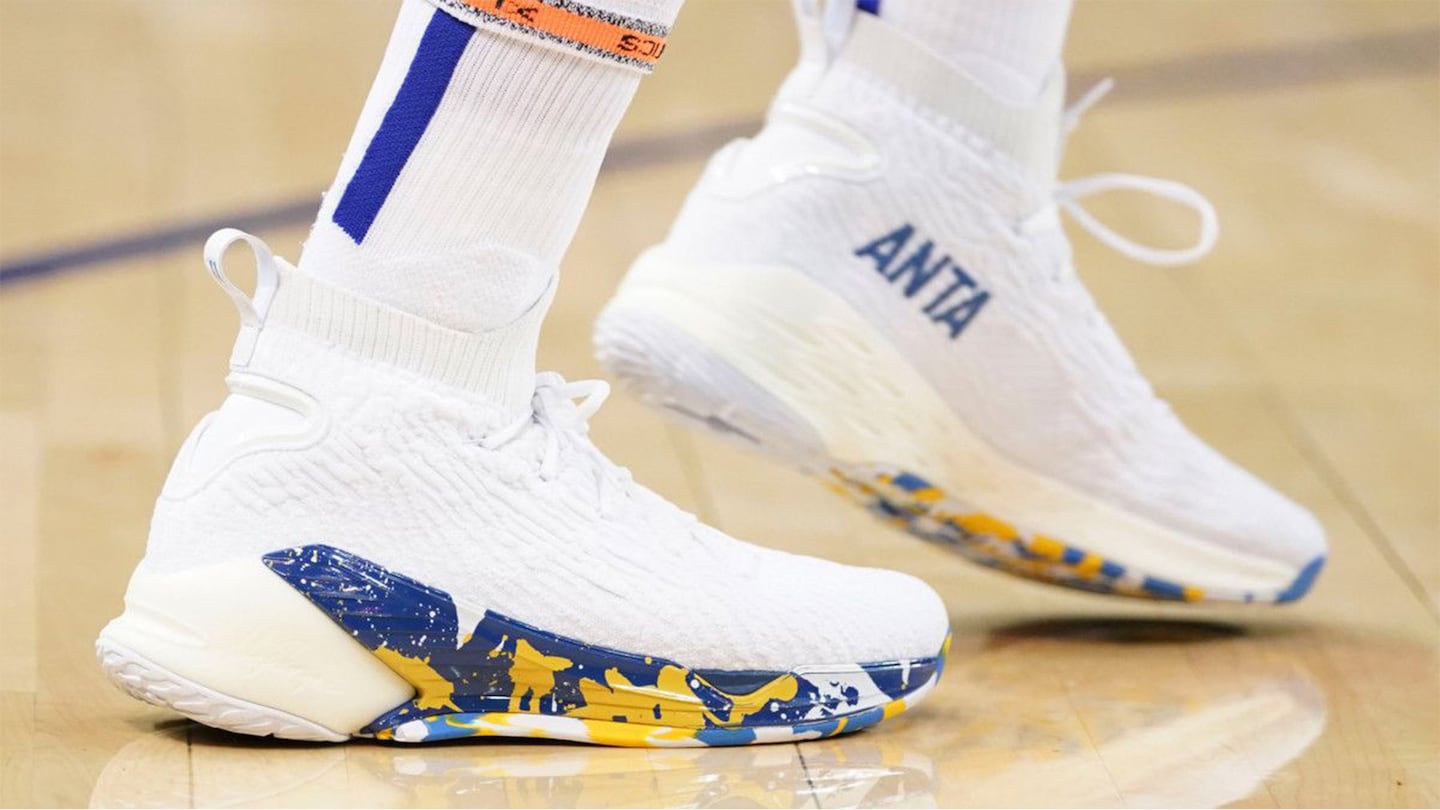
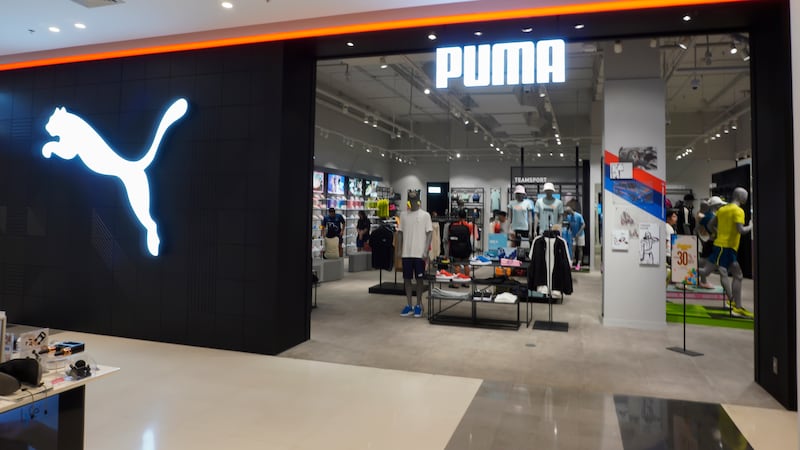
France’s billionaire Pinault family agreed to sell its 29 percent stake in Puma SE to China’s Anta Sports Products Ltd., paring back its holdings beyond the luxury-goods industry as it focuses on a turnaround at the key Gucci brand.
Anta agreed to spend €1.5 billion ($1.8 billion) for a leading ownership position in the German sports company and expand its portfolio of Western athletic brands that already includes labels ranging from Salomon to Wilson.
Puma shares jumped as much as 21 percent in early Frankfurt trading, roughly halving the past year’s decline.
The agreement will see Anta acquire roughly 43 million Puma shares from Artémis, the Pinault holding company, for €35 each, Anta said in a filing to the Hong Kong stock exchange on Tuesday. That’s a 62 percent premium to Puma’s last close.
ADVERTISEMENT
The deal will help the Pinault family reduce debt at Artémis as it prioritises high-end fashion. Kering SA, the Pinaults’ luxury-goods group, is still struggling to turn around Gucci after demand waned in China. The company also owns brands including Yves Saint Laurent and Balenciaga.
The Puma stake purchase could help Anta capitalise on the global growth in sports participation and demand for so-called athleisure products, including in China where it’s taken off since the Covid-19 pandemic. Anta’s stock rose as much as 3.4 percent on Tuesday, the most since November.
Anta is betting on Puma chief executive officer Arthur Hoeld’s early turnaround plan, which calls for revamping marketing efforts in hopes of making the leaping-cat brand more desirable for consumers. The CEO pledged in October to return to growth by 2027 and reestablish Puma as a top-three sports brand globally after it’s faced collapsing demand for its sneakers and apparel products over the past year.
Anta is taking a gamble that Puma’s more than 75 years of heritage in sports matter at a time when the footwear world has seen an explosion of new brands stealing market share, from Switzerland’s On Holding AG to Hoka to Anta itself.
“Heritage does count for something after all,” said James Grzinic, a London-based analyst for Jefferies, in a note.
The fact that Anta already has such confidence in Puma’s earnings potential should be encouraging for peers, the analyst noted. Cross-town rival Adidas AG has also struggled in recent months, with investors increasingly questioning its growth and earning potential despite its strong track record in recent years.
Anta’s stake purchase could pave the way for a full takeover of Puma, though Anta said it currently doesn’t have such a plan. Bloomberg News reported in November that Anta was among the companies exploring a potential acquisition of the German sportswear maker, saying the firm had been working with an adviser to evaluate a bid.
The transaction is expected to close by the end of 2026 and Anta plans to gain representation on Puma’s supervisory board, the statement said.
ADVERTISEMENT
The Puma investment will accelerate Anta’s globalization “and help drive the next chapter of growth for the global sports markets including China,” Anta Chairman Ding Shizhong said in the statement. “We believe Puma’s share price over the past few months does not fully reflect the long-term potential of the brand,” he added.
China’s biggest athletic apparel maker has been on a global brands-shopping spree, and also owns sportswear labels including Descente and Jack Wolfskin. In 2019, an Anta-led consortium paid $5.2 billion for Amer Sports, owner of premium names such as Salomon and Arc’teryx. Anta remains the largest shareholder in Amer, which is now a publicly listed company in New York.
The acquisitions have helped Anta expand its global stature and capture China’s growing enthusiasm for outdoor sports to become one of the country’s fastest-growing sportswear and equipment companies. In recent years, a multi-brand strategy has also helped it post stronger sales than key mass market rivals — from international brands like Nike Inc. and Adidas AG to local peers like Li Ning Co. — despite China’s consumer weakness and fierce price wars among retailers.
Anta’s stock has lost about a quarter of its market value since August, in part because investors have factored in an acquisition of Puma, Citigroup analysts Xiaopo Wei and Vincent Young wrote in a note. However, they said Puma could see “significant upside” in its China business due to synergy in areas like branding, supply chain and distribution.
Learn more:
Opinion: Puma’s Trailing the Pack — Deal or No Deal
The key to transforming the German sportswear brand is turbocharging sales growth, and that will be a struggle, writes Andrea Felsted.
Adidas’ staggering growth continues while the rest of the sportswear industry struggles to find its footing.
The activewear company’s dilemma is familiar to many companies that have grown rapidly and need to find ways to keep expanding while competitors encroach.
After months of speculation, Anta has finally acquired the Pinault family’s 29 percent stake in Puma. Suddenly, the brand’s future doesn’t seem so bleak.
The Yeezy founder and rapper also apologised to the Black community after suggesting in 2018 that slavery was ‘a choice.’
The embattled luxury department store is ‘absolutely dependent’ on companies like Chanel, LVMH and Kering, who could ‘suffocate’ the retailer if they stopped shipping, Reuters reported.
The polarising actress has become one of the most frequently tapped brand ambassadors in Hollywood. Whether she has the sway to build a lasting venture with her new lingerie line Syrn is still to be determined.
Fresh off a week of major moments, Tim Blanks and Imran Amed break down the blockbuster couture debuts at Dior and Chanel and what they signify about the state of the luxury industry.
Since the audit began in 2020, the Milanese fashion group found that more than a quarter of suppliers and subcontractors inspected had broken compliance rules.